

 Explore Our Catalogue
 Custom Plastic Parts

Nylon vs. Acetal: Which Engineering Plastic Should You Choose?

The decision to choose nylon or acetal for your project is rarely about which material is perceived to be “better”. Both materials are established engineering thermoplastics, but they behave very differently once exposed to moisture, friction or sustained loads.
For that reason, the correct choice will often be influenced by the component’s:
- Loading
- Operating environment
- Tolerance
Below is our guide to the scenarios for which each material is suited.
Nylon: Tough, Wear-Resistant and Mechanically Versatile
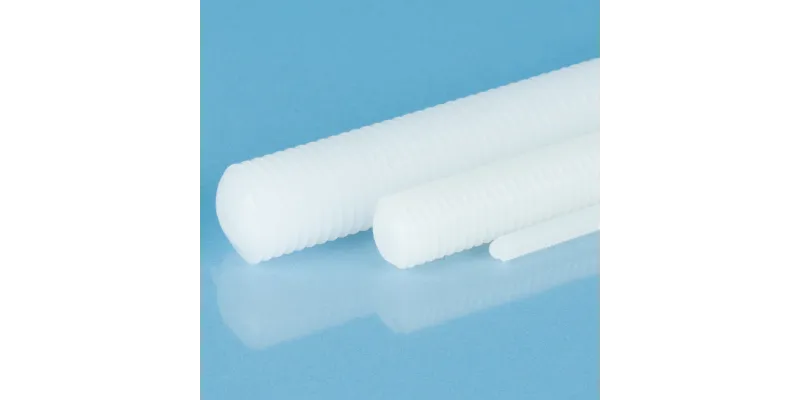
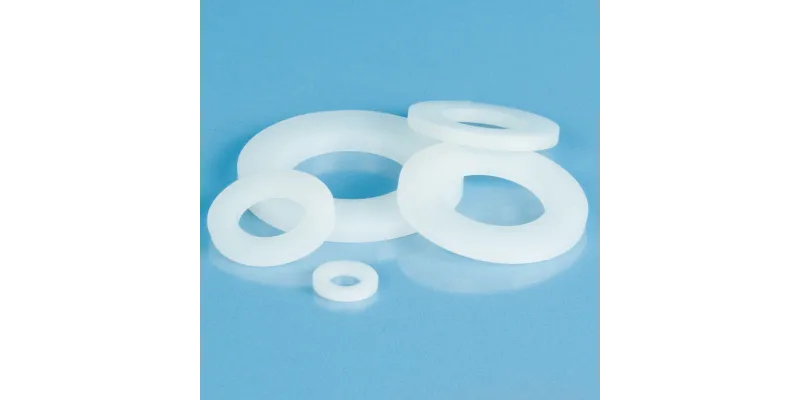
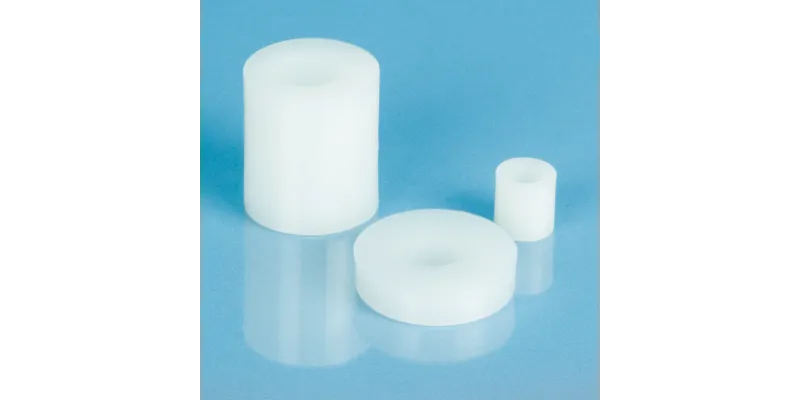
In most engineering applications, nylon refers to Nylon 66. Nylon 66 is a strong and tough material with high levels of resistance to wear, fatigue and impact. This combination of strength and resilience makes it the ideal choice for a range of applications, including:
- Threaded rods
- Nuts
- Bushes
- Spacers
- Rollers
- Components exposed to repeated mechanical loading
Another characteristic of Nylon 66 is its low friction. This means it performs incredibly well in sliding applications. It can also absorb shock and vibration more effectively than a highly rigid material. If your component needs to tolerate impact, intermittent loads or minor misalignment without cracking, Nylon 66 is a strong candidate.
The main limitation of Nylon 66 is moisture absorption. Absorbing water from its surroundings can impact its dimensions and condition-dependent mechanical properties. That’s not to say that Nylon 66 is wholly unsuitable for humid environments, but moisture conditioning should be taken into consideration when specifying close tolerances, press fits or precision threads.
If your component can accommodate dimensional movement, Nylon 66’s toughness and wear performance will often make it the preferred option.
Acetal: Precise, Rigid and Dimensionally Stable
Acetal is also known as polyoxymethylene or POM. It is often the go-to material for scenarios where dimensional consistency is critical. Unlike Nylon 66, acetal absorbs relatively little moisture, and this helps it retain its size and shape in changing humidity conditions. These characteristics make it particularly useful for:
- Gears
- Bearings
- Valve components
- Clips
- Tight-tolerance fasteners
Other characteristics include high stiffness and good fatigue, creep and wear resistance. It also machines cleanly and produces an excellent surface finish. Unlike Nylon 66, it is less likely to swell in service.
The trade-off with acetal is that, unlike Nylon 66, it is generally less forgiving when exposed to sudden impact. The selected grade is also important. Acetal homopolymers and copolymers can vary in strength, resistance to centre-line porosity and performance in hot water or chemically aggressive environments.
For that reason, chemical compatibility should always be checked against the exact substance, concentration, temperature and exposure duration.
Which Material Should You Specify?
So now comes the difficult question: which material should you choose?
If your priorities are toughness, impact resistance, wear performance and resilience under mechanical loading, choose Nylon 66.
If it’s stiffness, low moisture absorption, smooth movement and tight dimensional control that matter most, you’ll probably want to be looking at acetal.
Wall thickness, thread form, reinforcement, operating temperature, chemical exposure, moulding shrinkage and production method are just some of the factors that can influence the performance of your component. If you’re in any doubt about any of the conditions that the component is likely to be exposed to, it is worth considering prototype testing.
Need Help Selecting the Right Engineering Plastic?
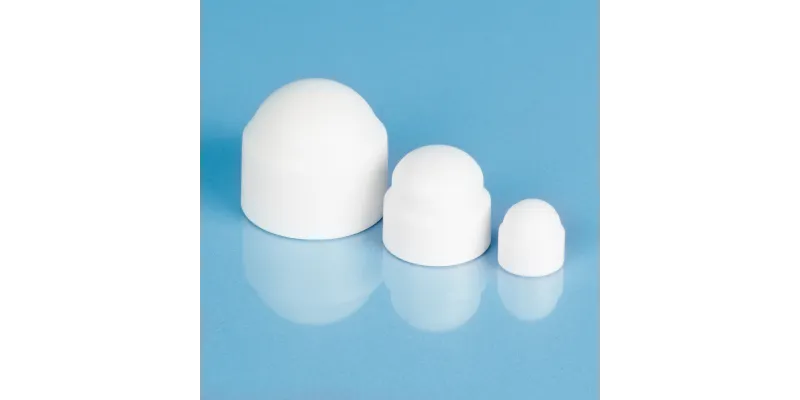
At Allthread, we manufacture both standard and custom plastic rods, fasteners, spacers and moulded components. Our components can be produced in Nylon 66, acetal and several other engineering plastics.
Whether you are starting out with an initial sketch or a technical drawing, our experienced team can guide you through material selection, prototyping and production.
To get started, please feel free to email your drawing and operating requirements to mike@allthread.co.uk to discuss the most appropriate material and manufacturing process for your component. You can also speak to us by calling 01268 726559.